
Every once in a while, you pick up a book expecting a standard scientific overview and end up with a text that profoundly alters how you view yourself. Masud Husain’s Our Brains, Our Selves: What a Neurologist’s Patients Taught Him About the Brain is exactly that kind of book. It is, without reservation, one of the best-written books I have read in a while.
On its surface, the book follows a classic lineage of neurological literature. Husain, an eminent Professor of Neurology and Cognitive Neuroscience at Oxford, takes us behind the doors of his consulting room to look at seven distinct case studies spanning his thirty-year career.
We meet a diverse cast of modern patients: a man who suffers a stroke and completely loses his internal motivation, a woman with severe memory impairment who forgets her own relationships, and individuals whose perceptions of reality have radically splintered.
But what sets this book apart — and why I couldn’t put it down — is the voice. It reads less like an academic textbook and much more like a deeply personal memoir. Husain is an eloquent writer with extraordinary empathy, wit, and kindness.
Where Medical Science Meets Philosophy
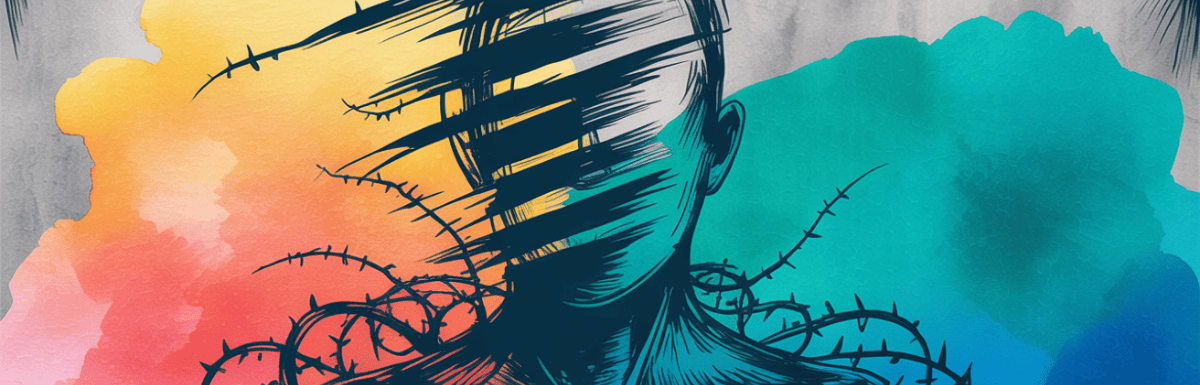
Our Brains, Our Selves is as much a work of philosophy as it is medical science. Husain uses the physical realities of brain damage — strokes, Alzheimer’s, and lesions — to probe the metaphysical questions thinkers have wrestled with for centuries: What actually is the “self”? Is identity stable, or is it a fragile illusion?
Through these compelling human dramas, Husain demonstrates that our sense of identity is not a static, unbreakable monument. Instead, our “self” is a dynamic product of complex neural processes. When a single circuit responsible for motivation, memory, or inhibition is altered, the entire personality shifts.
It is both a fascinating and slightly frightening realization. These stories are beautifully told, but they are all the more interesting because they are entirely true. They aren’t just oddities about stranger’s brains. They say something deeply urgent about you and me. They reveal how heavily our relationships, our daily choices, and our very souls rely on the quiet, flawless functioning of the grey organ inside our skulls.
The Verdict
In a literary landscape filled with dry pop-science, Husain’s narrative style is a breath of fresh air, easily standing in the same league as legendary storytellers like Oliver Sacks or Antonio Damasio. By guiding us through the ways the brain can become unruly, Husain builds a powerful, humane case for empathy and social belonging.
If you have any curiosity about the human mind, the nature of memory, or the structure of identity, this is an essential read. It is an extraordinary, life-enhancing medical detective story that will leave you meditating on what it truly means to be human.
My Rating: 5/5 stars